
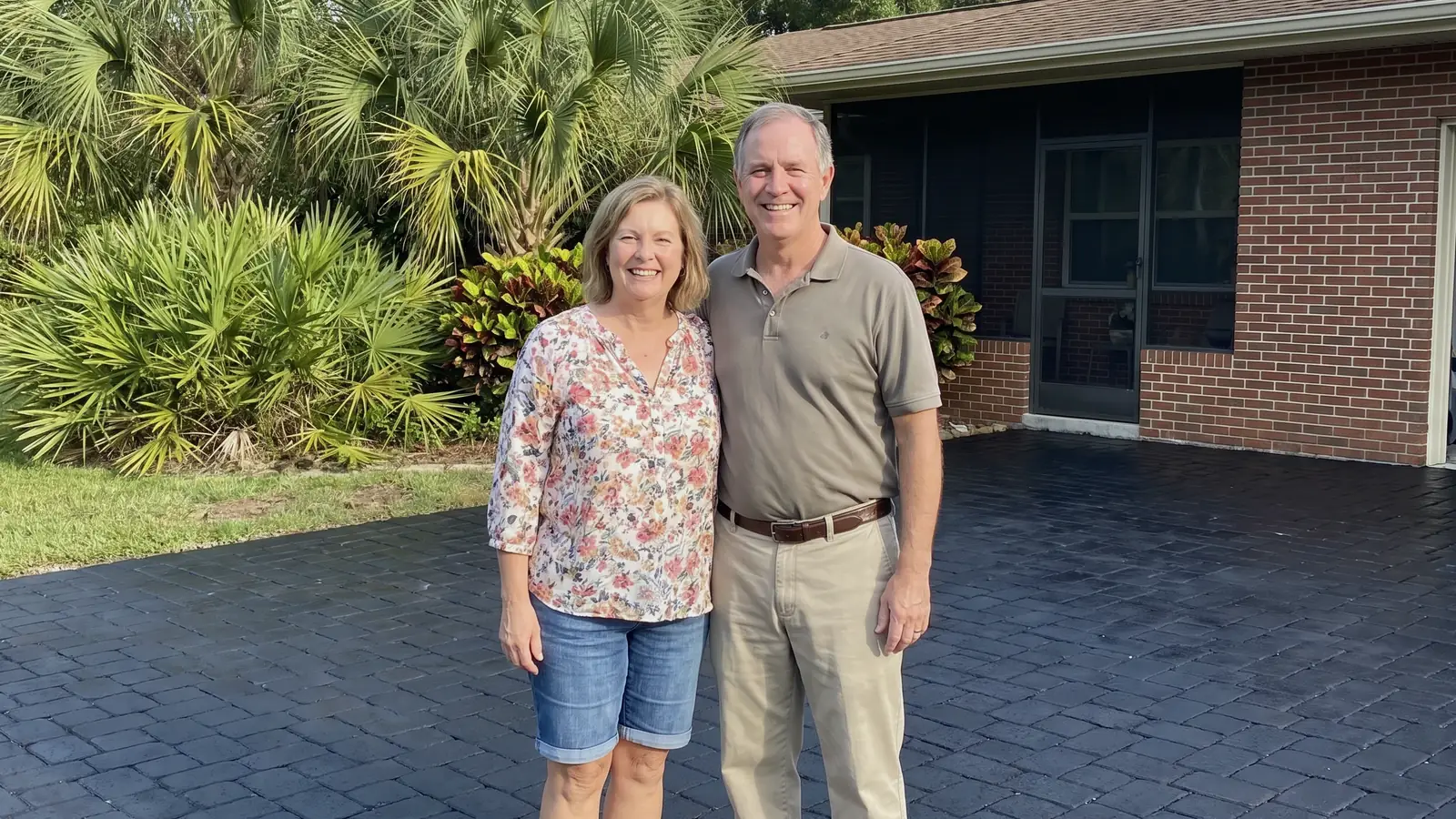
Oil, rust and leaf marks lifted off Clearwater pavers
Paver Stain Removal in Clearwater, FL
Call (727) 474-1551 and describe the marks, so a local contractor can plan the right cleaner.
- Brings out deeper paver color
- Fresh joint sand helps lock pavers in place
- Gives weeds less room to grow
- Makes the surface easier to keep clean
- Free estimate, no obligation
Request a Free Estimate
Free, no obligation.
Can a contractor get stains off my pavers in Clearwater, and how long until I hear back?
Yes, a local contractor treats stained pavers in Clearwater, FL, and you hear back inside 1 business day, often well before. Photos help a lot, so send one of the worst mark and one of the whole area. The first look is free. To get started, call (727) 474-1551.
Not every mark is the same stain, and the wrong cleaner can set a mark or dull the stone. Unilock lists oil, rust, leaf tannin, efflorescence, food and mold as separate problems, each with its own product. Say what the marks look like and where they sit when you ask for a free estimate.
What color is the stain, and what is it usually?
Color is a useful first clue, and it is why a quick description is useful on the phone. Dark, glossy spots in a driveway lean toward oil. Orange or rust-brown streaks lean toward iron. Brown or tea-colored blotches under trees lean toward leaf tannin, and green or black film leans toward algae and mold. White haze leans toward efflorescence. A contractor confirms on site, since two causes can look alike. Share what you see by calling (727) 474-1551.
Which Clearwater area places can book paver stain removal?
Stain removal is offered at homes in the city and the places around it, in Pinellas, Pasco and Hillsborough counties. Find yours below, or ask for a free estimate if you do not see it.
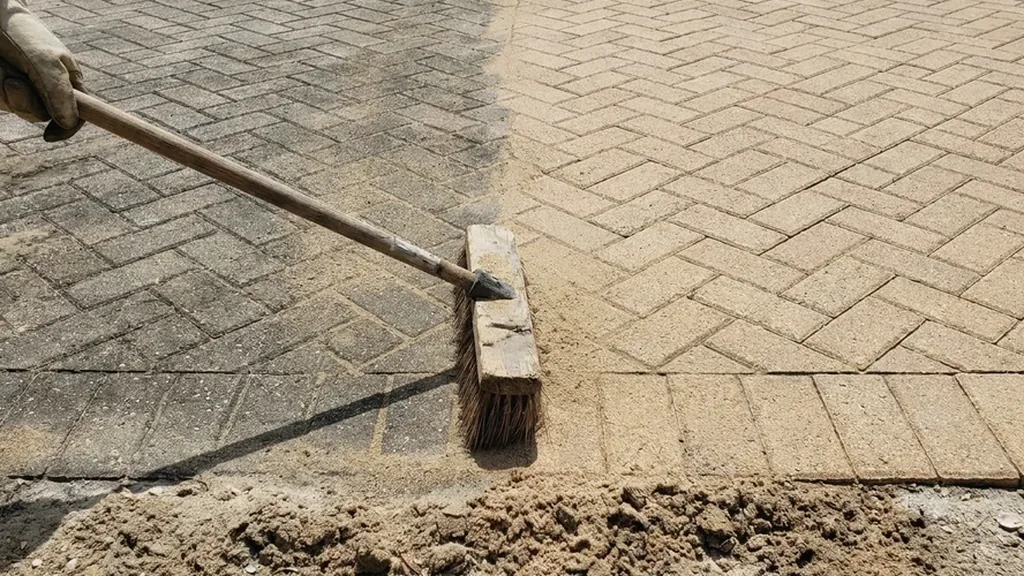
Where do paver stains come from around Clearwater homes?
Wikipedia lists about 52.6 inches of rain a year here and a wet season from June through September, so stone stays damp, and damp stone grows algae. Rusty's Pro Wash & Seal notes pool decks face chlorine and sunscreen, and that humidity feeds mold. Trees add tannin, and Unilock lists leaf stains by name. Metal left on stone can rust, and cars drip oil. Orange marks near a sprinkler are worth tracing, though the City of Clearwater says its reclaimed irrigation water does not leave stains, so another water supply or a metal item may be the cause. Mention which of these might apply when you ask for a free estimate.
Which stains are hardest to remove from pavers?
Age is the problem more than the type. A fresh spill is near the surface. An old one has soaked into the pores and may fade without disappearing. Rust and old oil take the most patience, and a contractor should say so before pricing. Unilock says efflorescence is often temporary and fades on its own, so some white marks need only time. For an honest read on yours, call (727) 474-1551.
How does the paver stain removal process treat each kind of stain?
A contractor matches the product to the mark, and that is why one general cleaner is not the answer. Here is how the common ones are approached. To go over yours, call (727) 474-1551.
Oil and grease
Unilock describes a granular absorbent left on dried oil for about six hours, then a degreasing wash. Fresh drips respond to soap left on for 20 to 30 minutes.
Rust
A rust specific product is used, and not on every stone. Unilock warns against wire brushes, which can leave metal bits that rust.
Leaf tannin
Brown blotches under trees come off with a cleaner and a soft brush, rinsed at a low setting, per Unilock.
Algae, mold and mildew
A mild detergent or a made for pavers cleaner is used, then the stone is rinsed toward a drain.
Efflorescence
Often temporary. A specialized remover speeds it up, and sealing waits until it clears.
Food, wine and pool spills
These are treated after a test patch, since the stone's color and finish decide the cleaner.
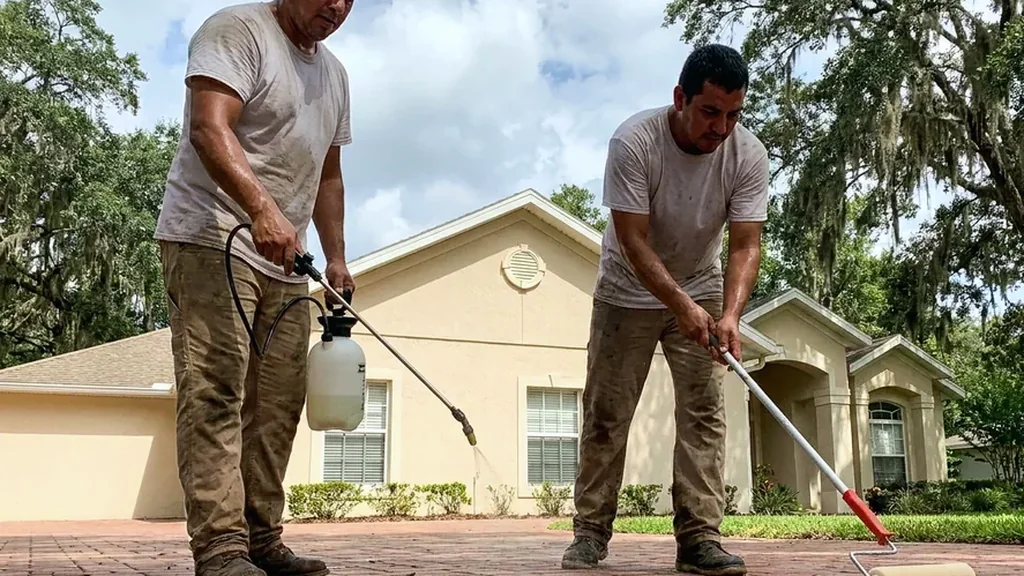
Does pressure washing alone remove paver stains?
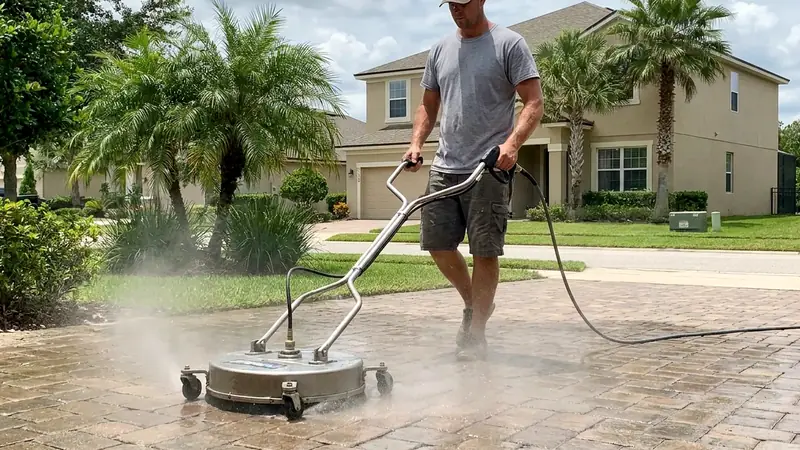
It removes loose dirt, and often that is not the stain. Unilock says to keep the spray no steeper than 30 degrees so joint material is not washed out, and to protect nearby plants and rinse toward drainage. Stains that have soaked in need a treatment first, and the wash then carries off what the product loosened. Rusty's Pro Wash & Seal lists pressure washing, algae removal, oil stain removal and rust treatment as separate prep steps, which matches that. Ask how the plan is split when you ask for a free estimate.
What does paver stain removal cost in Clearwater?
Rusty's Pro Wash & Seal says oil, rust and organic stain treatment is part of the professional cleaning step, and that heavy mold, algae, oil and rust add preparation. Its published range is $1.25 to $2.50 a square foot for cleaning and sealing around Tampa Bay, $1.75 to $3.00 for tint and seal in Clearwater, with a $500 to $1,000 minimum on small jobs. Use the table to get oriented, then ask for a free estimate.
If the stains come with a failing coat or empty joints, the paver restoration page explains the bigger job. For a plain wash, see the paver cleaning page.
| Situation | Published figure | What to know |
|---|---|---|
| Stains treated as part of a wash and seal | $1.25 to $2.50 per sq ft | Oil, rust and organic stain treatment sits inside the cleaning step |
| Stained or heavily faded pavers, tinted and sealed | $1.75 to $3.00 per sq ft | Heavily stained surfaces fall toward the high end |
| A 400 sq ft patio with stains, at the first range | $500 to $1,000 | Arithmetic gives $500 to $1,000, the same as the minimum charge |
| One small spot only | Minimum charge of $500 to $1,000 | Small jobs are priced by the minimum, not the area |
Source: Rusty's Pro Wash & Seal, Tampa Bay cost guide and Clearwater tinting page. No page this site read lists a separate price for stain removal alone, so the figures above are for a full wash with stain treatment, and the 400 square foot line is arithmetic, not a quote.
Will the stain come back after treatment?
Yes, if whatever caused the mark is still around. Algae returns where shade and moisture return, and rust returns where an iron source still touches the stone. Sealing afterward helps. Unilock suggests waiting for efflorescence to finish before sealing, and Rusty's Pro Wash & Seal says sealing over stains or algae locks them in, so treatment and sealing go in that order. Ask which cause is behind yours when you call (727) 474-1551.
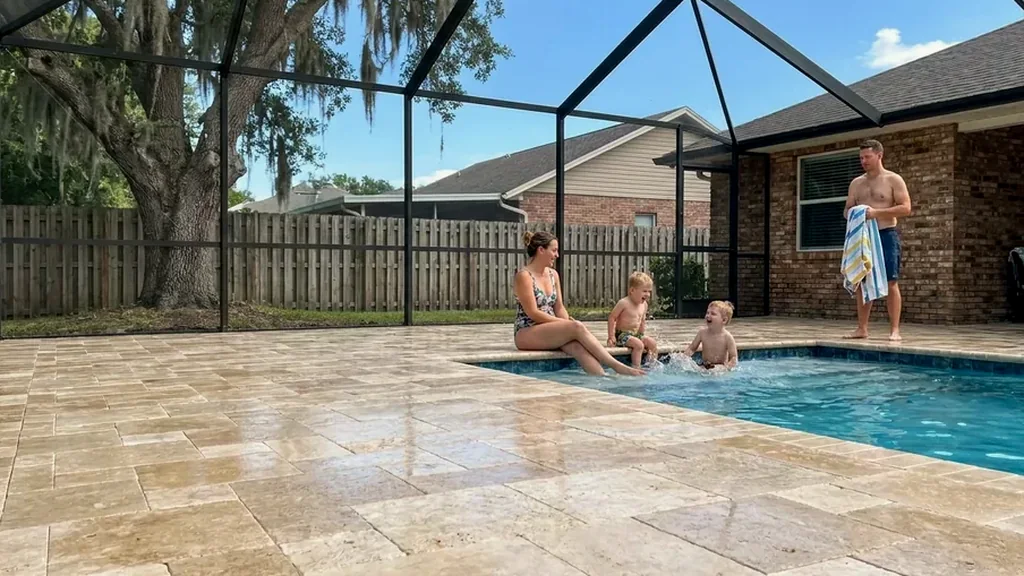
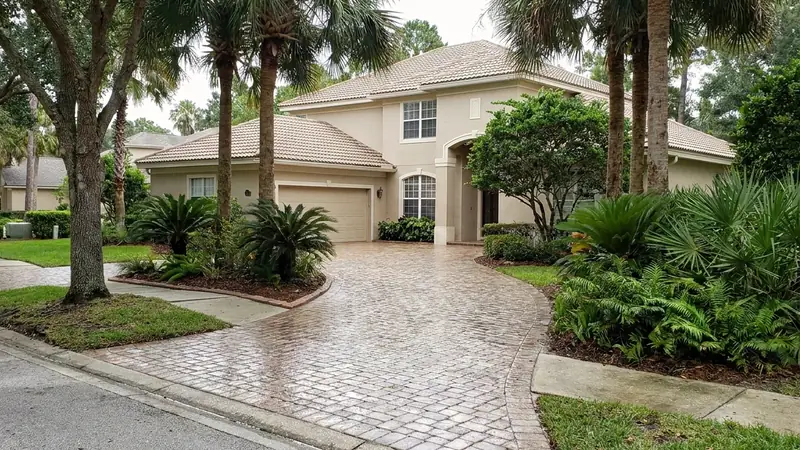
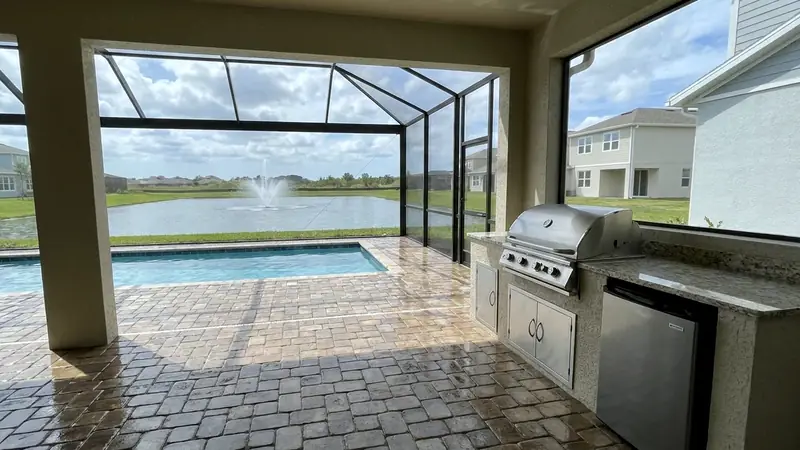
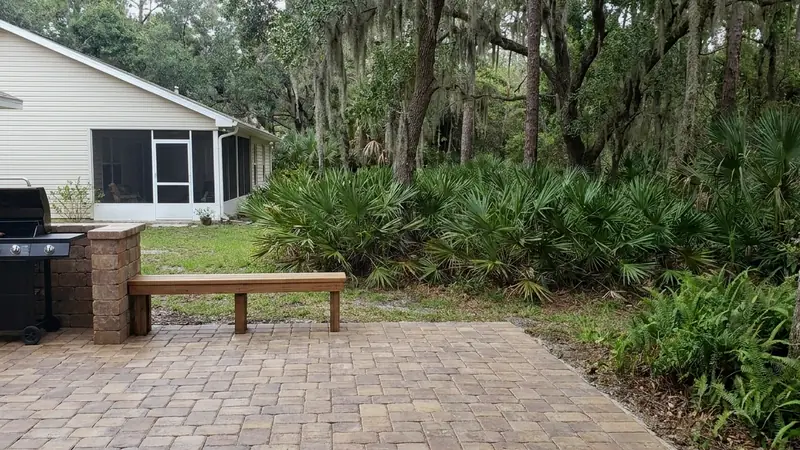
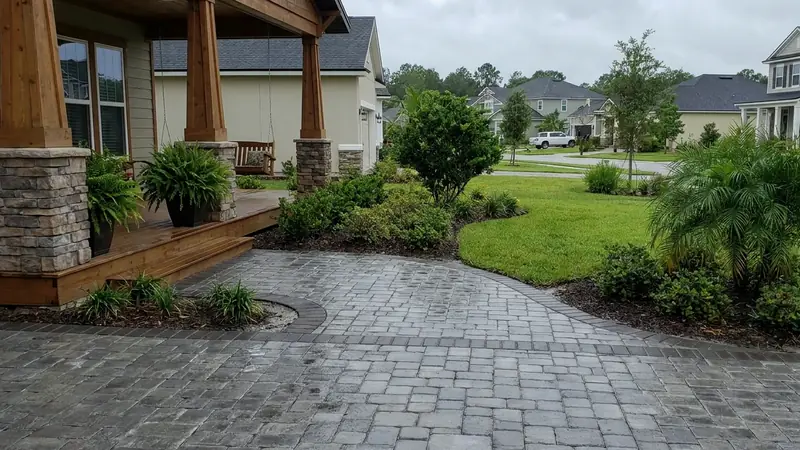
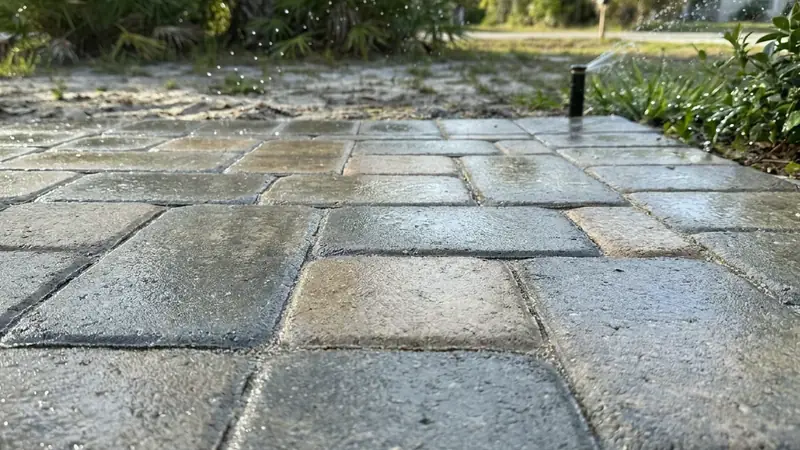
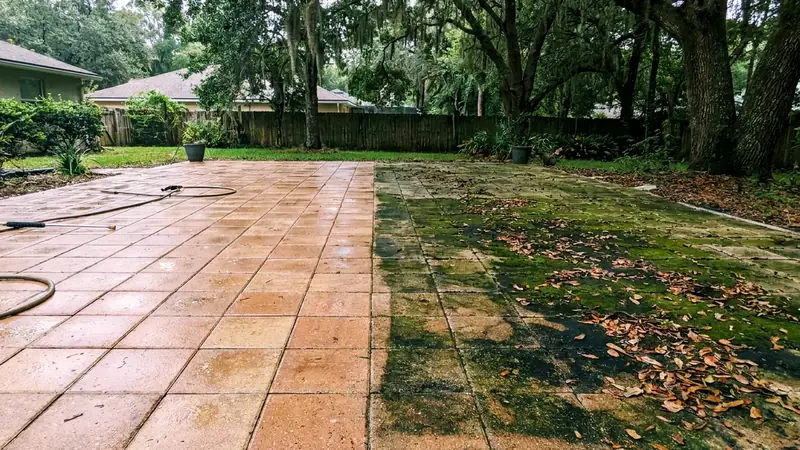
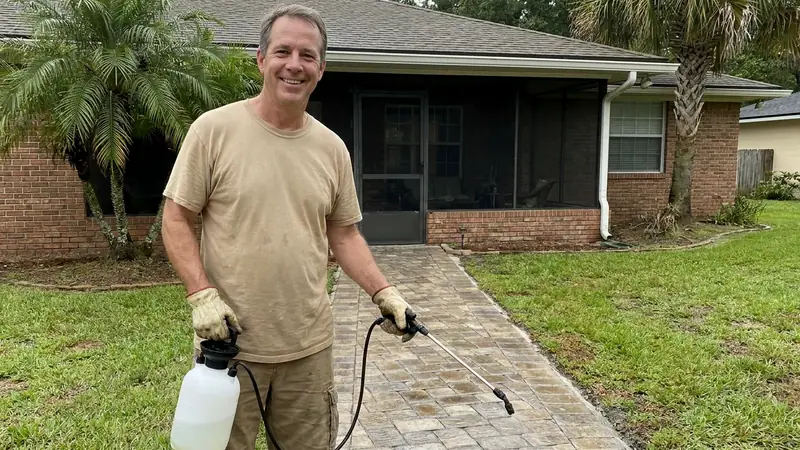
How do pavers look after stain treatment in Clearwater?
How do I protect pavers from stains once they are clean?
A sealer slows how fast spills sink in, which gives a contractor or an owner more time to deal with them. Rusty's says sealing keeps the surface easier to maintain. Keep plant beds and sprinkler heads in mind as well, because mulch, leaf litter and spray all leave marks. Re-aiming a sprinkler head is a small fix that spares a lot of scrubbing. To plan protection with the clean-up, call (727) 474-1551.
Frequently Asked Questions
What should I clean pavers with before sealing?
That depends on what is on them. Unilock says oil, rust, leaf tannin, efflorescence, food and mold each need their own cleaner, and Rusty's Pro Wash & Seal lists pressure washing, algae treatment, oil stain removal and rust treatment as the usual prep. Sealing over a stain traps it.
What is the average cost to seal pavers in Florida?
Rusty's Pro Wash & Seal says $1.25 to $2.50 a square foot around Tampa Bay for cleaning and sealing, with a minimum charge of $500 to $1,000. Stain treatment is part of the cleaning step, and heavy mold, rust or oil add prep.
Is there a pressure washing business in Florida that handles paver stains?
Many companies across Tampa Bay wash pavers, and some also seal them. Stain work is a skill apart from a rinse, so ask which cleaners will be used on your stain and stone, and read the contractor standards page here before you hire.
How much to charge for pressure washing in Florida?
Prices vary by job. For pavers, the published Tampa Bay figure is $1.25 to $2.50 a square foot to clean and seal, and a small job meets a minimum of $500 to $1,000. A wash alone usually costs less than that full job.
Why does my Clearwater paver driveway have orange or rust marks?
Orange or rust-brown marks usually point a contractor toward iron. The City of Clearwater says its reclaimed irrigation water does not leave stains, so the source is more likely a metal item left on the stone or a different water supply. Unilock also warns that wire brushes can leave metal bits that rust.
Will a pressure wash push stains deeper or damage the pavers?
It can if the spray is wrong. Unilock says to keep the spray angle no steeper than 30 degrees so joint material stays in place. Hard spray also does nothing for a stain that has soaked into the stone.
Do white marks on my pavers count as stains?
Often they are efflorescence, a white mineral bloom. Unilock calls it often temporary and says a specialized remover works faster. It matters because sealing over it traps it, so a contractor tells it apart from leftover sealer.
Can oil stains on a Clearwater driveway come out of pavers?
Many do. Unilock says dried oil needs about six hours with a granular absorbent before cleaning, and fresh oil responds to soap left on for 20 to 30 minutes. Old, deep spots may fade rather than vanish, and a contractor tells you which to expect.
Tired of looking at that mark on your Clearwater pavers?
Describe or photograph it. A local contractor answers within 1 business day, often within hours, and the first look is free.
Free, no obligation